About   Products & Capabilities    What's New    Contact     Home     brake lining     clutch facing
Ningbo zhenhai Boli Friction Material Factory was incorporated in 1995 for the production of Boli brand friction material and has grown into a leading manufacturer in China. We now manufacture a wide range of friction material including: clutch facing, brake lining, clutch disc, clutch cover, etc. The company has a strong product development center and the expertise lies with her staff. We have successfully designed and launched many new products in the last ten years. We received the ISO9001 registration in 2003 and become a member of China Friction & Sealing Material Association.

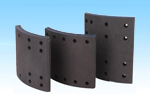
brake lining
clutch facing


Netcec & Bossgoo Link Sitemap


Brake lining

structure and function


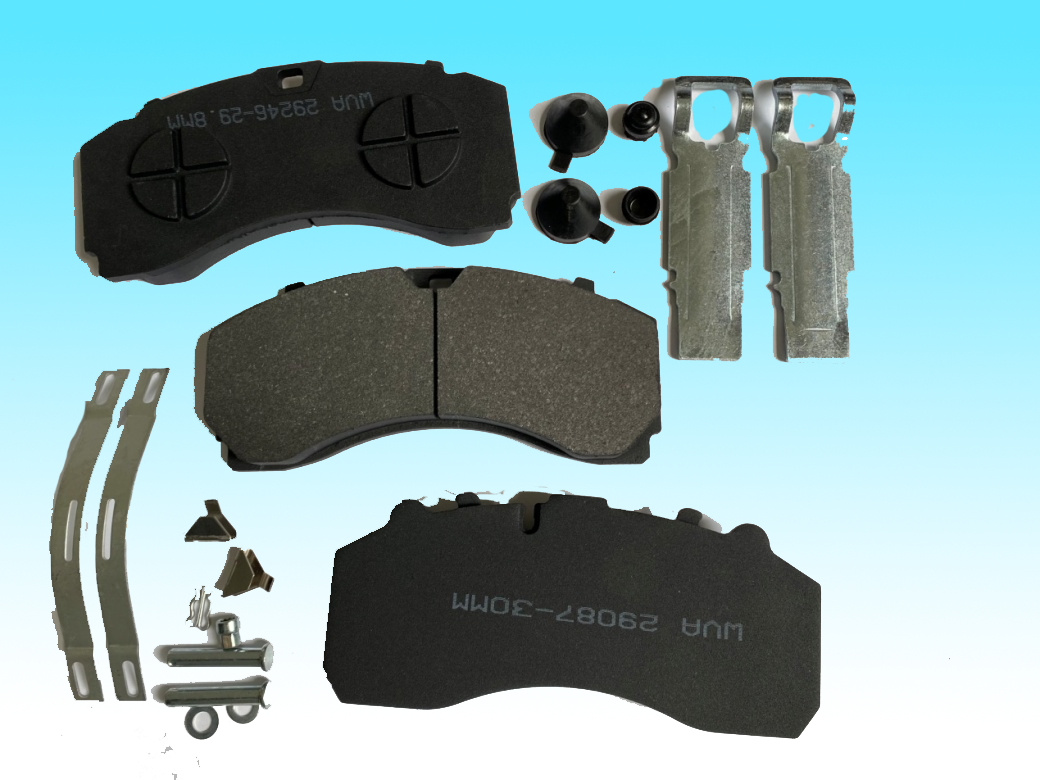
Brake linings are composed of a relatively soft but tough and heat-resistant material with a high coefficient of dynamic friction (and ideally an identical coefficient of static friction) typically mounted to a solid metal backing using high-temperature adhesives or rivets. The complete assembly (including lining and backing) is then often called a brake pad or brake shoe. The dynamic friction coefficient "μ" for most standard brake pads is usually in the range of 0.35 to 0.42. This means that a force of 1000 kg (or pounds) on the pad will give a resulting brake force close to 400 kg (or pounds). There are some racing pads that have a very high μ of 0.55 to 0.62 with excellent high temperature behaviour. These pads have high iron content and will usually outperform any other pad used with iron discs. Unfortunately nothing comes for free, and these high μ pads wear fast and also wear down the discs at a rather fast rate. However they are a very cost effective alternative to more exotic/expensive materials.

Using a typical bicycle brake as an example, the backing would be the metal shell which provides mechanical support, and the lining would be the rubbery portion which contacts the rims when the brakes are applied. In most modern vehicular applications the system is conceptually identical, except the rims would be replaced with solid steel (or sometimes exotic metal) disc. Furthermore, a metal tang is usually incorporated into the pad assembly. The tang contacts the rotors when the linings are worn out, causing an annoying noise designed to alert the motorist that brake servicing is required.

Since the lining is the portion of the braking system which converts the vehicle's kinetic energy into heat, the lining must be capable of surviving high temperatures without excessive wear (leading to frequent replacement) or outgassing (which causes brake fade, a decrease in the stopping power of the brake).

Due to its suitability, asbestos was often a component in brake linings; as a result, brake dust should never be inhaled. Brake linings or pads have not used asbestos since 2003, having been replaced by aramid.

Links

Master Cylinder, Brake Master Cylinder, Wheel Cylinder